
The Maid Hid Bruises Under Her Sleeve… Until Her Billionaire Boss Discovered the Monster Waiting at Home

Posted May 5, 2026

PART 1

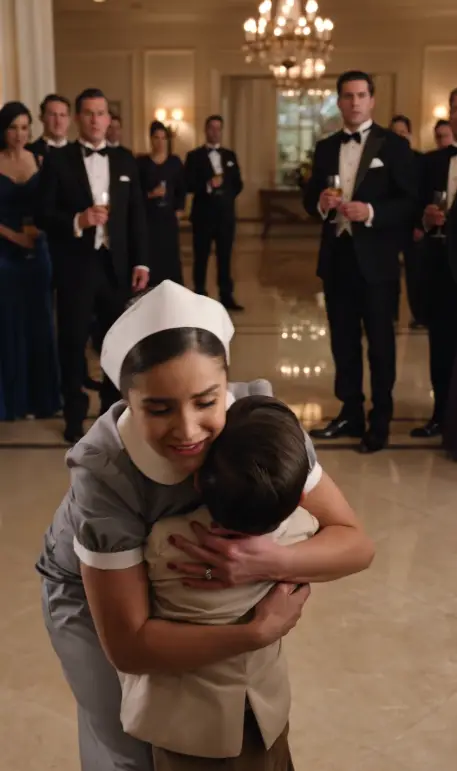
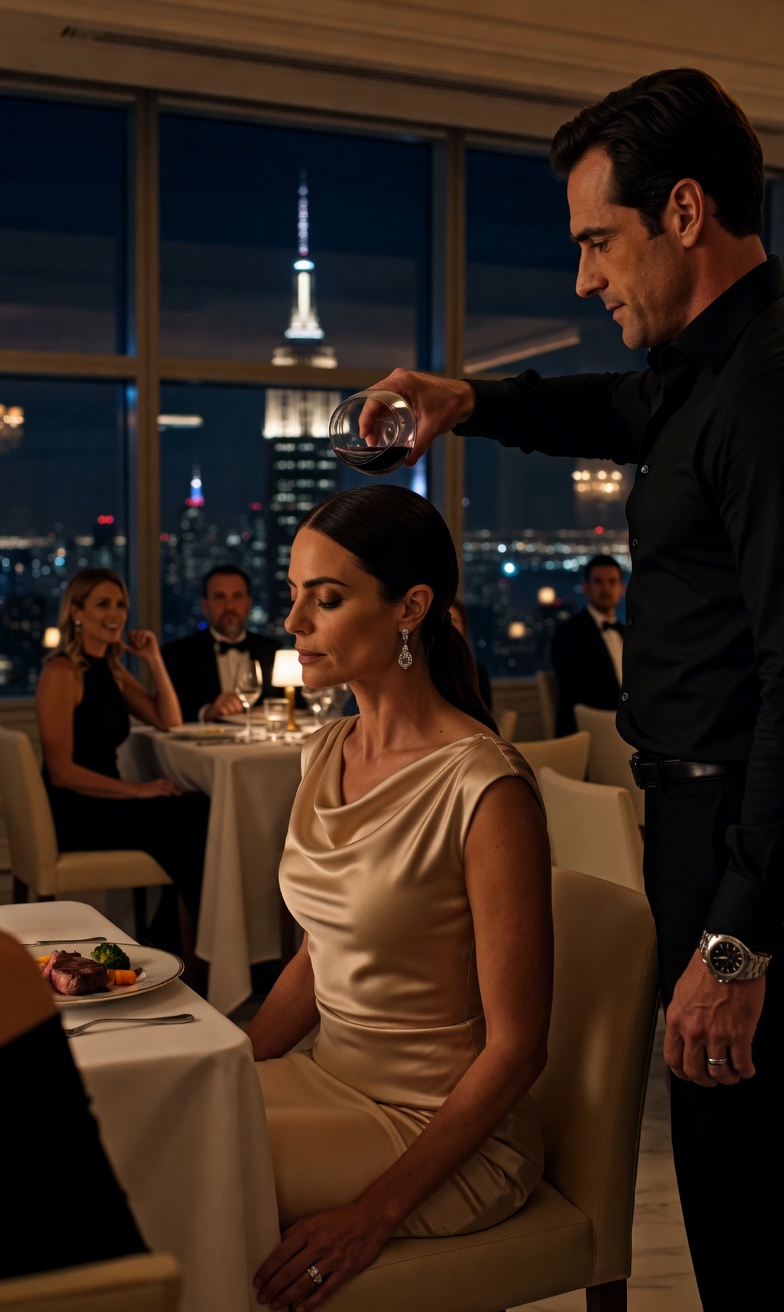
Maria stood in front of the granite island in the kitchen of the enormous mansion in Beverly Hills, chopping cilantro and onion with mechanical precision. It was barely eight in the morning when she felt a shadow behind her. It was Mr. Richard Whitman, the owner of the house and her employer. The businessman did not say good morning or ask for his usual coffee. He remained in a grave silence, his eyes fixed on the woman’s right forearm. Maria tried to pull down the sleeve of her uniform to hide it, but the deep purple bruise, marked clearly in the shape of four fingers, was completely visible. Before she could stammer some excuse about falling on the stairs, Mr. Whitman asked in a heavy voice, “Who did that to you?” Maria trembled from head to toe, the knife slipped from her hand and struck the wooden board, and with a broken voice, she said the sentence that would change the course of their lives: “If I tell you, sir, he will kill my daughter.” Maria had worked in that house for three years. She was the most loyal employee, had never missed a single day, never asked for advances, and worked with a submission that bordered on invisibility. Still, in recent months, Mr. Whitman had noticed that she dragged her feet. When the great grandfather clock struck five in the afternoon, the time she was supposed to leave, Maria invented tasks. She polished silver that was already shining or scrubbed immaculate tiles. She wanted to stretch every minute inside the mansion because the real terror began when she crossed the door of her humble home in the working-class neighborhood where she lived. There, Michael was waiting for her. To the world, Michael was a saint. He was the man who organized the church fair, the one who greeted neighbors with a dazzling smile, the one who sat in the front row of church every Sunday. No one on the block would ever suspect that the same man who helped elderly women carry their grocery bags was the monster who, when the lights went out, squeezed his wife’s arm with brutal force. Michael was calculating. He did not shout, so the neighbors would not hear; he destroyed her in whispers. “Look at you. No one will believe you,” he repeated every night, planting in her the certainty that she was worth nothing. But Mr. Whitman did not look away. He sat on a stool and, with unexpected empathy for a man in his position, murmured, “I know what that feels like, Maria. I saw it. It happened to my mother.” That confession broke through the maid’s armor. She cried, not with her usual resignation, but with the relief of someone being believed for the first time. Maria begged him not to do anything Michael could discover, or he would kill her and her fifteen-year-old daughter. Richard promised, but that same night, he used his influence. The next day, while Michael pretended to be an exemplary citizen in the streets, a private security team entered Maria’s house and installed a hidden camera with audio in a strategic spot covering the living room, the hallway, and the front door. The following morning, Richard reviewed the first recordings in his office. His hands trembled as he watched Michael push and humiliate Maria in the dark, reviving the ghosts of his own childhood. But the businessman’s blood froze when he saw what happened at two in the morning. Michael got up in silence, opened the front door, and received an armed man in the darkness. There was a quick exchange: a stack of bills for a heavy package wrapped in brown tape. The real hell had only just begun, and in front of that screen, it was impossible not to feel a chill at the thought that no one could believe what was about to happen.


PART 2

The pattern repeated for four consecutive nights. Different men, always at dawn, came to the door of Maria’s modest home to exchange packages and cash. Richard, consumed by outrage, hired a private investigator to pull on that dark thread. The answer arrived in less than forty-eight hours, and it was devastating. Michael was not only the main distributor of illegal substances in that area, but he had also woven a ruthless fraud network. Using Maria’s documents without her knowledge, he had opened three credit cards and taken out several bank loans. The humble woman, who barely understood finance, was buried under a gigantic debt. When Richard revealed the truth to her, Maria collapsed in the mansion kitchen. Panic suffocated her. She felt trapped in a net she would never escape alive. “He has me tied up from every side, Mr. Whitman. I’m never going to get away,” she sobbed, covering her face with her hands. The businessman took her by the shoulders and assured her that all that evidence was the rope with which Michael would hang himself. Days later, the stress took its toll. Maria felt a deep dizziness while preparing sauce at the stove. A metallic and familiar nausea turned her stomach. She ran to the service bathroom, leaned over the sink, and when she looked at herself in the mirror, terror paralyzed her. She was pregnant. Fifteen years after her first daughter, she was going to bring another child into that hell. She cried bitterly in the solitude of her room, thinking about the fate of a baby born in the claws of a criminal. When she confessed the news to her boss, Richard remained silent for a long time, clenched his fists, and swore in a voice that allowed no argument, “That child will not be born in that hell. I promise you.” That same night, the businessman transferred all the evidence onto a USB drive: the videos of the assaults, the recordings of the drug exchanges at three in the morning, and the files proving the financial fraud. He drove his SUV to the central offices of the district attorney. The commander in charge reviewed the evidence in absolute silence. When he finished, he removed his glasses and declared that they had everything necessary to bury that man in prison for decades. But they needed Maria to act completely normal until the day of the operation. She had to return to that house, serve dinner to her tormentor, and pretend everything remained the same. It was the hardest test of her life, but knowing she was no longer alone filled her with supernatural strength. On Sunday morning, the sun shone brightly over the neighborhood. Michael woke up euphoric. He put on a freshly ironed white shirt, which Maria had prepared for him, and applied cologne in front of the mirror while rehearsing a smile of false humility. That day, the neighborhood church was going to publicly honor him for his “invaluable community service” and his “support for families.” He left the house greeting neighbors, walking with the arrogance of a king in his own territory. Maria, following Richard’s instructions, stayed home, trembling but with her heart full of a hope she had believed dead. The noon service was packed. Michael sat in the front row, hands clasped in a posture of devotion. Near the end of the ceremony, the priest took the microphone. “Brothers and sisters, today we want to recognize a pillar of our community. An honorable man, devoted to his family and to God.” Michael stood, bathing himself in false purity as the congregation began to applaud. He climbed the three steps to the altar and prepared to give his thank-you speech. Suddenly, a metallic crash silenced the entire church. The heavy wooden doors of the parish burst open. Five uniformed and heavily armed police officers advanced down the center aisle, marching with firm steps. The silence became so dense that everyone could hear the broken breathing of the crowd. The commander climbed the altar, looked Michael straight in the eyes, and with a voice that echoed through the church vaults, announced, “Michael Grant, you are under arrest for domestic violence, aggravated fraud, and narcotics-related crimes.” Michael’s face lost all color. He tried to stammer, shouted that it was a setup, and looked toward the pews for the support of the people who had idolized him seconds earlier. But no one moved. The shock and disappointment on his neighbors’ faces crushed him. They placed the handcuffs on him right there, in front of the cross, and the click of metal echoed like the final sentence of his fraud. As they dragged him down the center aisle, the mask of the exemplary citizen fell forever, revealing the pathetic and terrified monster he truly was. Outside, standing on the sidewalk, was Maria. She had disobeyed the order to stay home because she needed to see the end of her nightmare. When Michael was pushed toward the patrol car, his eyes met hers through the glass. He expected to see the same submissive woman as always, but instead he found a lioness standing tall, one protective hand over her belly. For the first time in his life, fear was not in Maria’s eyes; it was in his. Weeks later, with Michael in a maximum-security prison and no possibility of bail, Richard invited Maria to sit under the shade of a huge jacaranda tree in the mansion garden. There, the man in the immaculate suit broke down. He told her that his mother, named Hope, had suffered the same torment at the hands of his father. When Richard was six years old, a maid in the house wrapped him in a blanket and fled with him to save him during a brutal beating. But his mother was not as lucky; Hope was beaten to death that same night. “I couldn’t save my mother, Maria,” Richard said with tears in his eyes, “but I could save you.” Months later, in the room of a clean and safe hospital, the cry of a newborn girl filled the air. When the nurse placed the baby in Maria’s arms, she stroked the child’s forehead and spoke her name for the first time: Hope. In that name lived the memory of the woman who could not be rescued and the unbreakable promise of a life free from fear. Maria sold the property where she had suffered so much. With the businessman’s legal support, the fraudulent debts were canceled, and she began again from zero. She bought a small house with a patio full of flowerpots in a quiet neighborhood. Her fifteen-year-old daughter laughed again and slept without startling awake. Every afternoon, when Maria left work exactly at five o’clock, she no longer looked for excuses to stay. Returning home had become the greatest reward of her life. And while she rocked Hope on the balcony, watching the colors of the sunset, she understood the greatest lesson of her life: true wealth does not live in enormous mansions, nor in money, nor in flawless appearances before society. True wealth is living without fear, breathing in peace, and having the courage to break the

Comments (0)

Loading comments...

Everyone Thought the Dog Ruined the Wedding… Until the Bride’s Deadly Secret Fell Onto the Church Floor
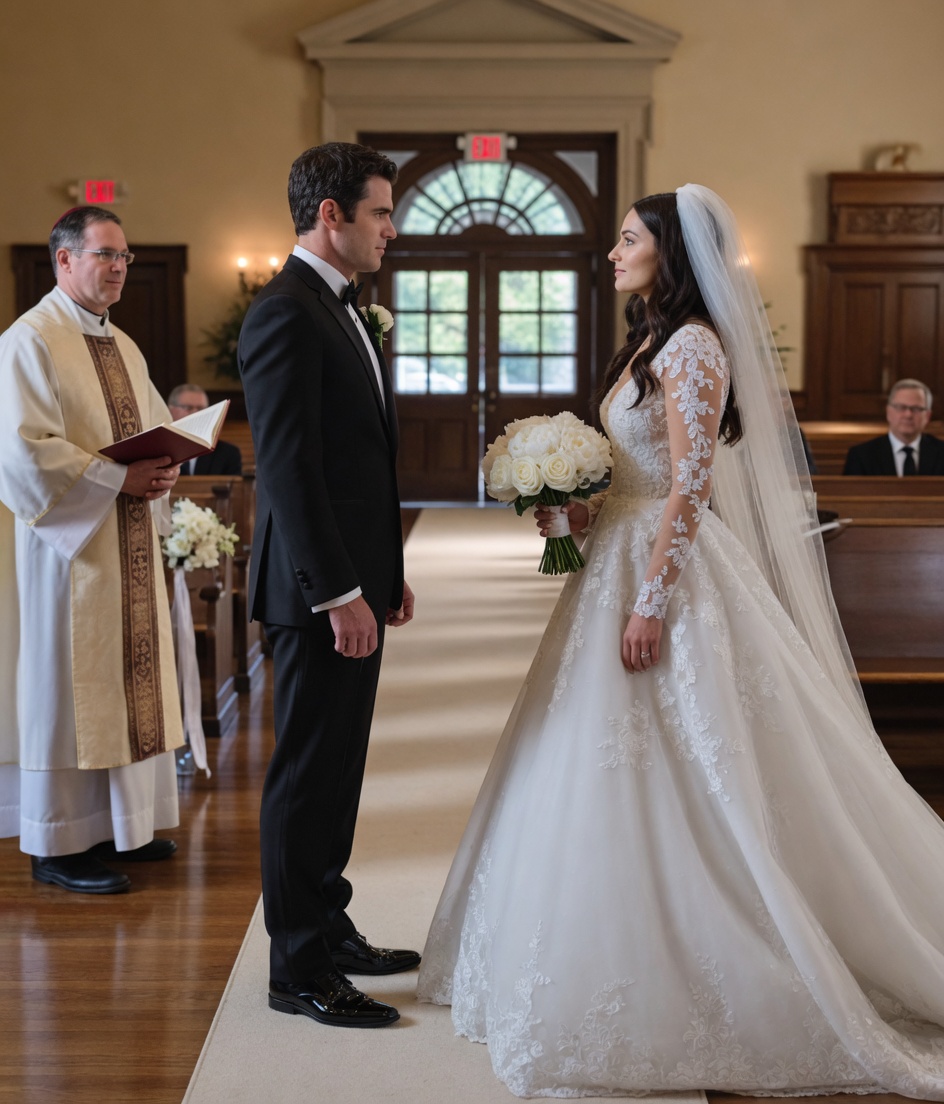
By the time the organ reached its final movement, Graham Mercer almost believed the day was perfect. The church was bright with stained-glass daylight, white flowers, polished wood pews, and warm candlelight. Guests filled both sides of the aisle, dressed like people who expected the wedding to appear in magazines. At the altar, Juliette Monroe stood across from him in a lace-and-satin gown, her veil falling over dark hair, her face calm and beautiful. Graham had met her eleven months earlier at a charity dinner in Charleston. She was charming, educated, and careful with every word. She made him feel understood in a way he had not felt since his father died and left him running Mercer Shipping alone. Some people had warned him that the relationship moved too quickly. His sister had said, “You barely know her.” His best man had asked why Juliette avoided every conversation about her past. Even Kane, Graham’s black Doberman, had never accepted her. The dog was trained, obedient, and steady around almost everyone. But whenever Juliette entered a room, Kane watched her with rigid attention, ears high, body tense. Juliette laughed it off at first. Later, she insisted the dog made her nervous. So Graham agreed Kane would stay at Mercer House with the handler until after the ceremony. Now, standing at the altar, Graham tried not to think about that. He looked at Juliette, held her gloved hands, and told himself he was about to begin a good life. Father Bannon opened the prayer book. “If anyone here has cause to show why these two should not be joined in holy matrimony,” he said, “speak now, or forever hold your peace.” The church was silent. Then the rear doors burst open. The organ stopped mid-note. A black Doberman shot into the aisle, barking hard, nails striking the wood as guests jerked back in panic. Graham turned sharply. “Kane?!” The dog sprinted straight toward the altar. Juliette’s face changed before Kane reached her. Not confusion. Fear. Kane leapt at the front of her gown, growling and snapping into the fabric near her waist. He did not bite her body. He tore at the dress. Juliette stumbled backward, furious and terrified. “Get him off me!” Graham moved toward them, but Kane yanked again. Silk and lace ripped. Seed pearls scattered across the polished floor. Then something dark slipped from under the torn layers of the gown. It hit the wood with a sharp metallic clatter. A black tactical knife lay near Graham’s shoe. For one second, nobody moved. Graham stared down at it, the color leaving his face. “What the hell is this?” Juliette looked at the knife. She did not look surprised. That was what hit Graham hardest. A man rose from a side pew, moving fast. He was middle-aged, in a dark plain suit, with a badge in one hand and a handgun in the other. Two other plainclothes officers stood almost at the same time. Guests recoiled into the pews. Kane moved between Graham and Juliette, barking once, then growling low. The detective stepped into the aisle. “Don’t touch that knife.” Juliette froze. Her gown was ripped at the waist, one side of the skirt hanging loose. Her bridal expression was gone. Her eyes were hard now, cold and calculating. The detective raised his weapon toward her. “Juliette Monroe, don’t move.” The church fell into stunned silence. Graham looked from the detective to Juliette. “What is happening?” The detective did not take his eyes off her. “Mr. Mercer, step away from her.” Graham stepped back slowly. Juliette’s mouth tightened. Two officers moved up the aisle. Kane growled again, holding his position in front of Graham. The detective spoke clearly, so the nearest guests could hear. “Her legal name is not Juliette Monroe. We believe she has used at least three identities in the last six years.” Graham’s chest tightened. “No.” The detective glanced at him. “I’m sorry.” Juliette finally spoke, but not to the detective. She looked at Graham. “You don’t know what you’re doing.” Graham stared at her. Only an hour earlier, she had stood in a dressing room and let his mother fasten a bracelet around her wrist. She had kissed him and whispered, “By tonight, everything changes.” Now that sentence came back to him differently. The detective took another step forward. “We have open investigations in Georgia, North Carolina, and Virginia,” he said. “Three wealthy men. Three quick marriages. Three deaths shortly after the ceremony. A fall. A drowning. A boating accident. All ruled accidental at first.” A horrified murmur moved through the church. Graham looked at Juliette. She did not deny it. His stomach turned. The officers reached her. One took her arm. She twisted just enough to make him tighten his grip. “Careful,” she snapped. “This dress costs more than your salary.” No one laughed. The second officer cuffed her over the white satin gloves. That sound made the whole thing real. Graham stepped back again, his heel catching on scattered pearls. His best man reached for him, but Graham barely felt it. The detective nodded toward the knife. “She was carrying that under the gown. We believe tonight was going to be staged as a private accident after the reception.” Graham remembered the honeymoon villa Juliette had chosen. Isolated. Cliffside. No neighboring houses close enough to hear anything. He remembered the life insurance forms she had pushed him to update. He remembered how she had never allowed Kane near her. Kane had known.   Or at least he had known enough. “How did he get here?” Graham asked, his voice rough. The detective lowered his gun slightly as Juliette was secured. “Your handler called us twenty minutes ago. The dog broke free outside Mercer House and went straight for the car. He was tracking something on her dress from earlier. We had a unit close behind him, but he got inside first.” Juliette laughed once under her breath. “The dog,” she said. “Of course.” Kane barked so suddenly she flinched. It was the first honest reaction Graham had seen from her all day. The officers led Juliette down the aisle. Guests pulled away from her path. Her veil dragged crookedly behind her, the torn train catching on the floor. No one reached to help her. At the doors, she looked back once. “You were easier than the others,” she said to Graham. The words landed without drama. Cold. Flat. Final. Then the doors closed behind her. For a long moment, nobody inside the church moved. The priest stood near the altar with the prayer book still in his hands. Graham’s mother sat in the front pew, crying silently. His best man finally put a hand on his shoulder, but Graham stepped away. He sank onto the altar step. Kane came to him immediately, pressing his head against Graham’s leg. The dog’s body was still tense, but the worst of the fight had left him. Graham put one hand on Kane’s collar. “You knew,” he whispered. Kane stayed still. Outside, sirens grew louder, then faded as the police cars pulled away from the church. The detective returned a few minutes later after the knife had been bagged as evidence. He stood near Graham, careful not to crowd him. “We’ve been watching her for weeks,” he said. “We didn’t have enough to arrest her before today. The identity fraud was strong, but not enough to stop the ceremony. We were waiting for her to make a move.” “You let me stand up there with her.” “We had officers in the church and outside every exit,” the detective said. “You were never out of sight.” Graham looked up at him. “That’s supposed to make me feel better?” “No,” the detective said. “It’s just the truth.” Graham looked down the aisle where Juliette had been taken. “How much of it was real?” The detective was quiet for a moment. “With people like her, it’s hard to know where the performance ends.” That was answer enough. The guests were slowly being guided outside. Some whispered. Some cried. Some looked at Graham and quickly looked away, as if his humiliation were another thing they should not touch. Graham stood with Kane beside him. His mother came to him first. She wrapped both arms around him, and for the first time since childhood, Graham let himself lean into her. “I’m sorry,” she whispered. He didn’t answer. There was nothing useful to say. By the next morning, Juliette’s real name was everywhere: Natalie Vale. Nora Kincaid. Rebecca Lane. The news called her the “Runaway Bride Killer” before the police even finished the first press conference. Graham hated the name immediately. It made her sound like a story. She had nearly been his wife. Investigators searched the hotel suite where she had stayed before the wedding. They found documents, burner phones, altered IDs, insurance paperwork, and notes about Graham’s schedule. They also found a sedative hidden in a cosmetics case. The plan was simple. Wedding. Reception. Private departure. Honeymoon flight the next morning. Somewhere before that, Graham would suffer an “accident” no one could explain quickly enough to save him. Kane had changed the timing. The dog had smelled something on the dress when Juliette came to Mercer House for photographs that morning. He had lunged then too, but Juliette screamed, and everyone thought the dog had become overstimulated. Graham had been embarrassed. He had ordered Kane taken away. That part stayed with him. He had ignored the one creature in his life that had not been fooled. The trial came eight months later. Graham testified for less than an hour. He answered every question clearly. Juliette watched him the whole time with no expression. When the prosecutor showed the church surveillance footage, the courtroom went silent. Kane sprinting down the aisle. The dress tearing. The knife falling. Graham staring at the floor as his wedding ended in the space of ten seconds. The jury convicted her on attempted murder, identity fraud, conspiracy, and charges tied to the earlier deaths. The other cases followed after that. Families of the dead men sat behind Graham in court. None of them spoke to him for long, but several shook his hand. One woman held onto him a little longer than the others. “My brother had a dog too,” she said. “She made him give it away.” Graham had no answer. After sentencing, he went home to Mercer House and found Kane lying in the front hall, head raised, waiting. For weeks after the wedding, Graham avoided the church, the photographs, the unopened gifts, and most calls. He kept only a few people close. His mother. His sister. His best man. Kane. Especially Kane. At night, when sleep would not come, Graham walked the property with him. No music. No phone. Just the dog moving a few feet ahead, stopping whenever Graham stopped, looking back as if checking that he was still there. Three months after the trial, Graham returned to St. Michael’s. Not for a ceremony. Not for closure. The church was empty except for Father Bannon, who let him in through a side door and then left him alone. The flowers were gone. The candles were gone. The aisle had been polished clean. Graham stood where he had stood that day and looked toward the rear doors. Kane sat beside him. For a long time, Graham said nothing. Then he bent down, clipped the leash onto Kane’s collar, and walked out through the same doors the dog had broken open. Outside, the afternoon was cool and bright.

FOFF